


Holographic Card Finishing: Foil, Spot UV, Texture
What separates a collectible card from a printed one: holographic film, foil stamping, spot UV and texture, and how each is registered to the artwork.

Foil stamping, spot UV, embossing, gilding and lamination — what each finish looks like and what it adds. This card finishing page collects the guides below.
What separates a collectible card from a printed one: holographic film, foil stamping, spot UV and texture, and how each is registered to the artwork.
Finishing articles on foil stamping, spot UV, embossing, gilding and lamination: what each process looks like, how it is registered and what it adds to the schedule.
Card finishing decides how a deck looks on a shelf and how it feels in the hand. Lamination controls touch; foil, UV and embossing control light. Each is a separate pass with its own curing time.
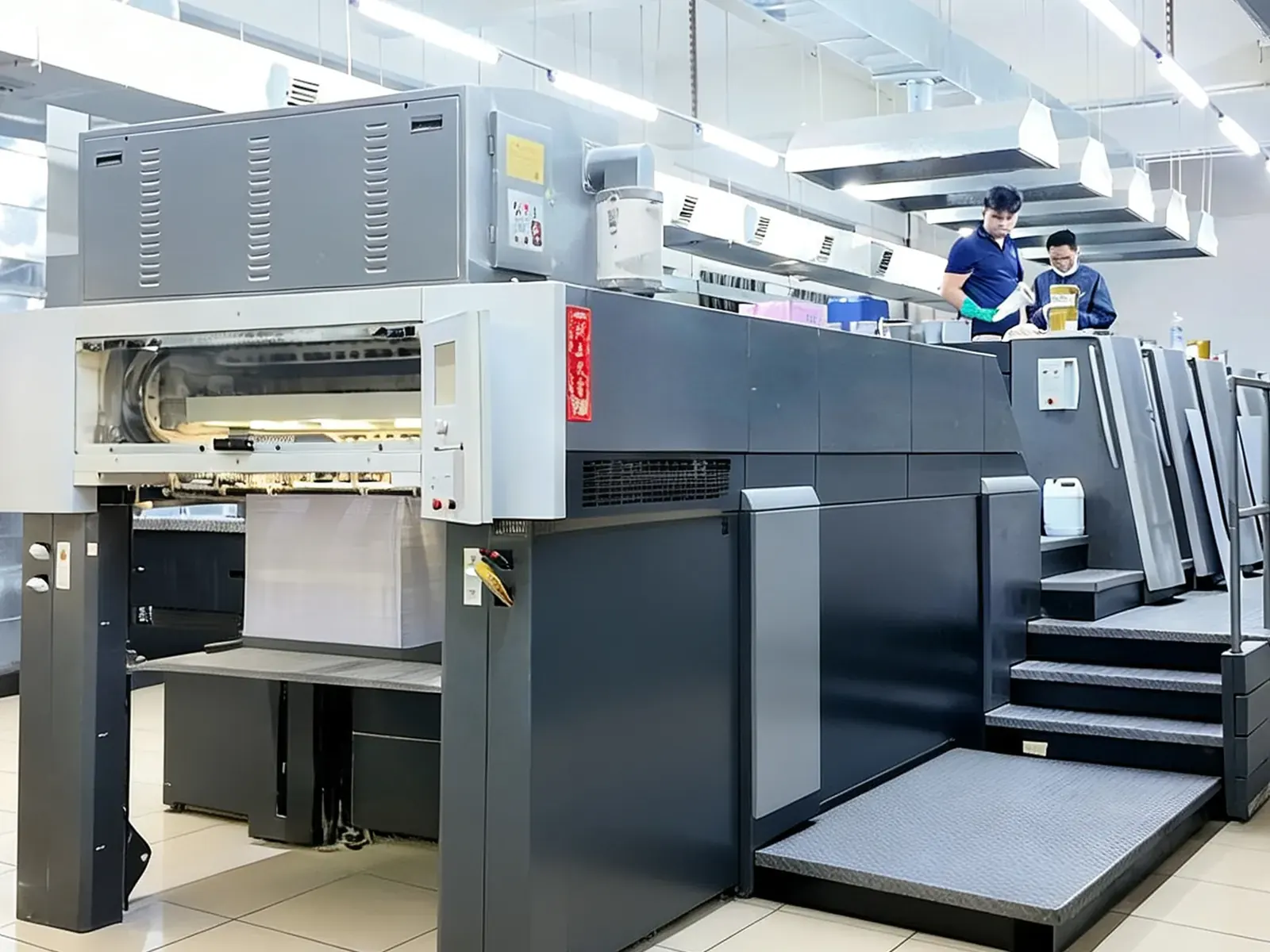
Matte or linen BOPP lamination. Soft-touch looks premium but marks with oil and shows edge wear faster on a working deck.
Yes, 2–4 days per foil pass, plus curing. Gilded edges add another 2–4 days before the deck can be packed.
Yes. Linen lamination with spot UV and a gold foil logo is common on collectible and gift decks.
A finish cannot be judged from a screen. Request a sample that carries the exact film, the exact foil colour and the exact varnish, because a matte film with a gold foil reads differently on a black card than on a white one. Check the sample under the light your buyer will use, then sign it as the reference for the run.
Two practical tests: rub a thumb across the foil edge to see if it scuffs, and flex the card corner to see whether the film lifts. Both failures appear within a week of handling, not on the day of delivery.
Foil fails at the edge first: a worn die leaves a halo, and a temperature that is too high spreads adhesive beyond the stamped area. Spot UV fails on thin lines, which fill in, and on dark cards where the gloss reads as a smudge. Both failures are visible on the first fifty sheets and cheap to fix at that point.
A reprint matches only if the film roll, the foil batch and the varnish are the same. Ask the printer to record the supplier and batch on the job sheet. A different roll of the same nominal matte film can change the sheen enough to be visible when two print runs sit side by side on a shelf.